High blood sugar can sometimes rise suddenly and become dangerous if not managed properly. While mild increases may improve with routine diabetes management, extremely high glucose levels can require immediate action and medical attention.
Understanding how to lower blood sugar quickly in an emergency safely is important for people managing diabetes in the UK. The goal is not to panic or attempt unsafe “quick fixes,” but to respond carefully and monitor symptoms closely.
What Counts as a Blood Sugar Emergency?
A blood sugar emergency usually involves significantly elevated glucose levels combined with symptoms such as:
- Extreme thirst
- Frequent urination
- Blurred vision
- Fatigue
- Nausea
- Confusion
- Shortness of breath
Very high blood sugar levels can increase the risk of diabetic ketoacidosis (DKA) or hyperosmolar hyperglycaemic state (HHS), both of which require urgent medical care.
The NHS advises seeking urgent medical attention if severe symptoms appear alongside high glucose readings.
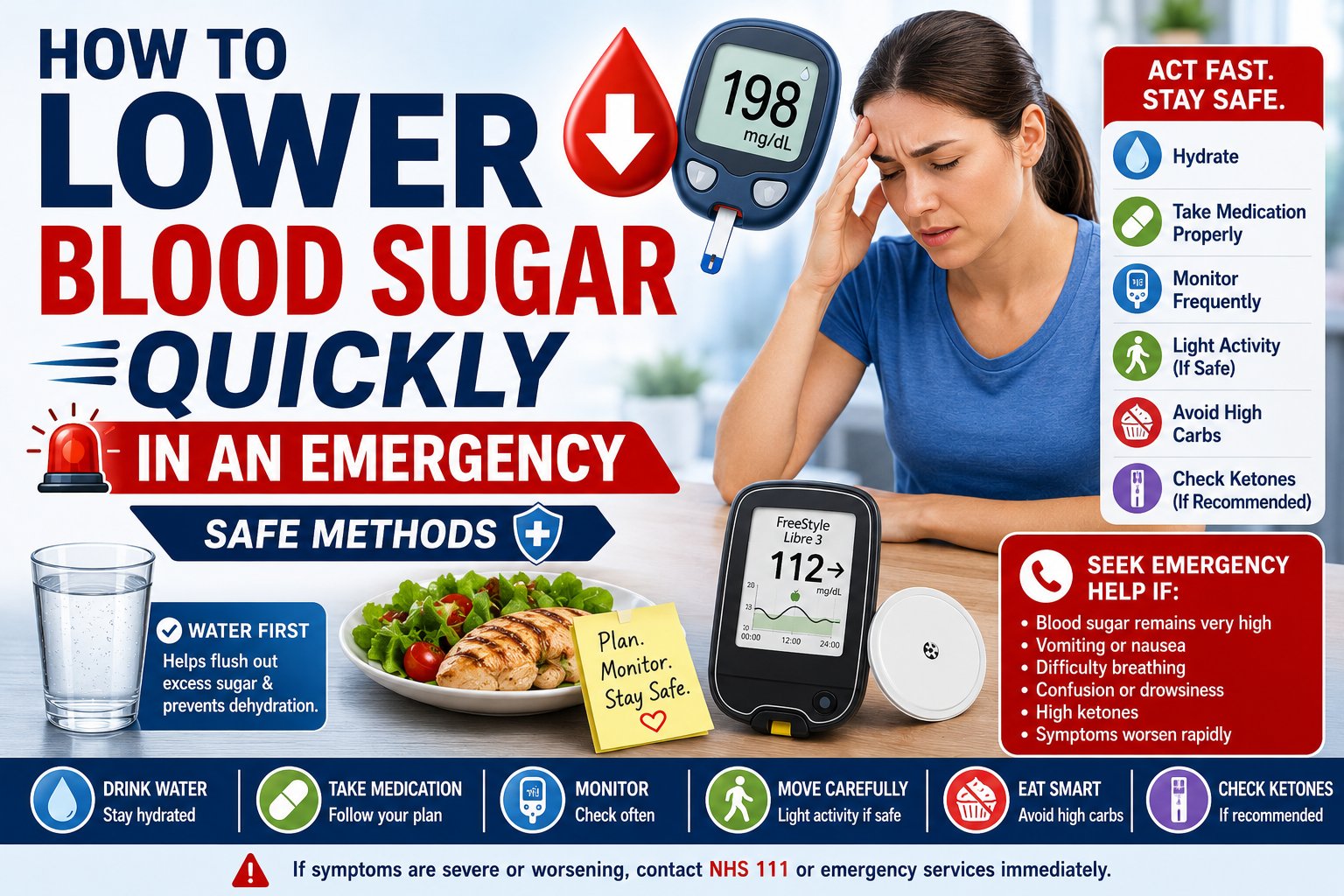
1. Drink Water Immediately
One of the safest first steps is increasing water intake.
Hydration helps the body flush excess glucose through urine while reducing dehydration caused by high blood sugar levels. Avoid sugary drinks, energy drinks, and fruit juices during hyperglycaemia episodes.
Staying hydrated is especially important if glucose levels remain elevated for several hours.
2. Take Prescribed Diabetes Medication Properly
If you use insulin or prescribed diabetes medication, follow your healthcare provider’s instructions carefully.
Never take extra medication without medical guidance. Overcorrecting blood sugar too aggressively can lead to hypoglycaemia, which creates additional risks.
If glucose levels continue rising despite medication, contact your diabetes team or NHS 111.
3. Monitor Blood Sugar Frequently
Frequent monitoring is extremely important during high blood sugar episodes.
Continuous glucose monitoring systems help users track trends and respond more safely. Many people in the UK use FreeStyle Libre sensors to monitor real-time glucose changes more effectively.
4. Go for Light Physical Activity Carefully
Light activity such as walking may help lower blood sugar levels for some people.
However, exercise should be avoided if:
- Ketones are present
- Blood sugar is extremely high
- You feel unwell or dizzy
Exercising during severe hyperglycaemia can sometimes worsen the situation, especially in Type 1 diabetes.
5. Avoid High-Carbohydrate Foods
During emergency high blood sugar episodes, avoid:
- Sugary snacks
- Sweet drinks
- Refined carbohydrates
- Large meals
Instead, focus on hydration and follow your prescribed diabetes management plan.
6. Check for Ketones if Recommended
People with Type 1 diabetes may need to check ketone levels during severe hyperglycaemia.
High ketone levels combined with elevated blood sugar can indicate diabetic ketoacidosis, which requires immediate medical care.
Do not ignore symptoms such as vomiting, abdominal pain, rapid breathing, or confusion.
Why Continuous Monitoring Helps During Emergencies
CGM systems help users understand whether glucose levels are:
- Rising quickly
- Stabilising
- Falling safely
This trend information is often more useful than isolated finger-prick readings during emergencies.
Many UK users purchase sensors and diabetes management supplies through Diabetes Pharmacy UK.
Useful Product Links
When to Seek Emergency Medical Help
Seek urgent medical attention immediately if:
- Blood sugar remains dangerously high
- Vomiting develops
- Breathing becomes difficult
- Confusion appears
- Ketones are high
- Symptoms worsen rapidly
In the UK, contact NHS 111 or emergency services if severe symptoms develop.
Common Mistakes to Avoid
During blood sugar emergencies, avoid:
- Taking excessive insulin without advice
- Drinking sugary beverages
- Ignoring symptoms
- Exercising aggressively
- Waiting too long to seek help
Safe and controlled correction is always better than rushing.
Final Verdict
During blood sugar emergencies, avoid:
- Taking excessive insulin without advice
- Drinking sugary beverages
- Ignoring symptoms
- Exercising aggressively
- Waiting too long to seek help
Safe and controlled correction is always better than rushing.
FAQS
- What is considered dangerously high blood sugar?
Very high blood sugar levels combined with symptoms such as vomiting, confusion, or breathing difficulties may require emergency treatment. - Can drinking water lower blood sugar?
Water helps hydration and may assist the body in flushing excess glucose through urine. - Should I exercise with very high blood sugar?
Not always. Exercise can sometimes worsen hyperglycaemia if ketones are present or glucose levels are extremely high. - Why is CGM useful during high blood sugar episodes?
CGM systems show glucose trends in real time, helping users monitor changes more effectively. - When should I seek emergency help for high blood sugar?
Seek urgent medical attention if symptoms worsen, ketones are high, or glucose levels remain dangerously elevated.