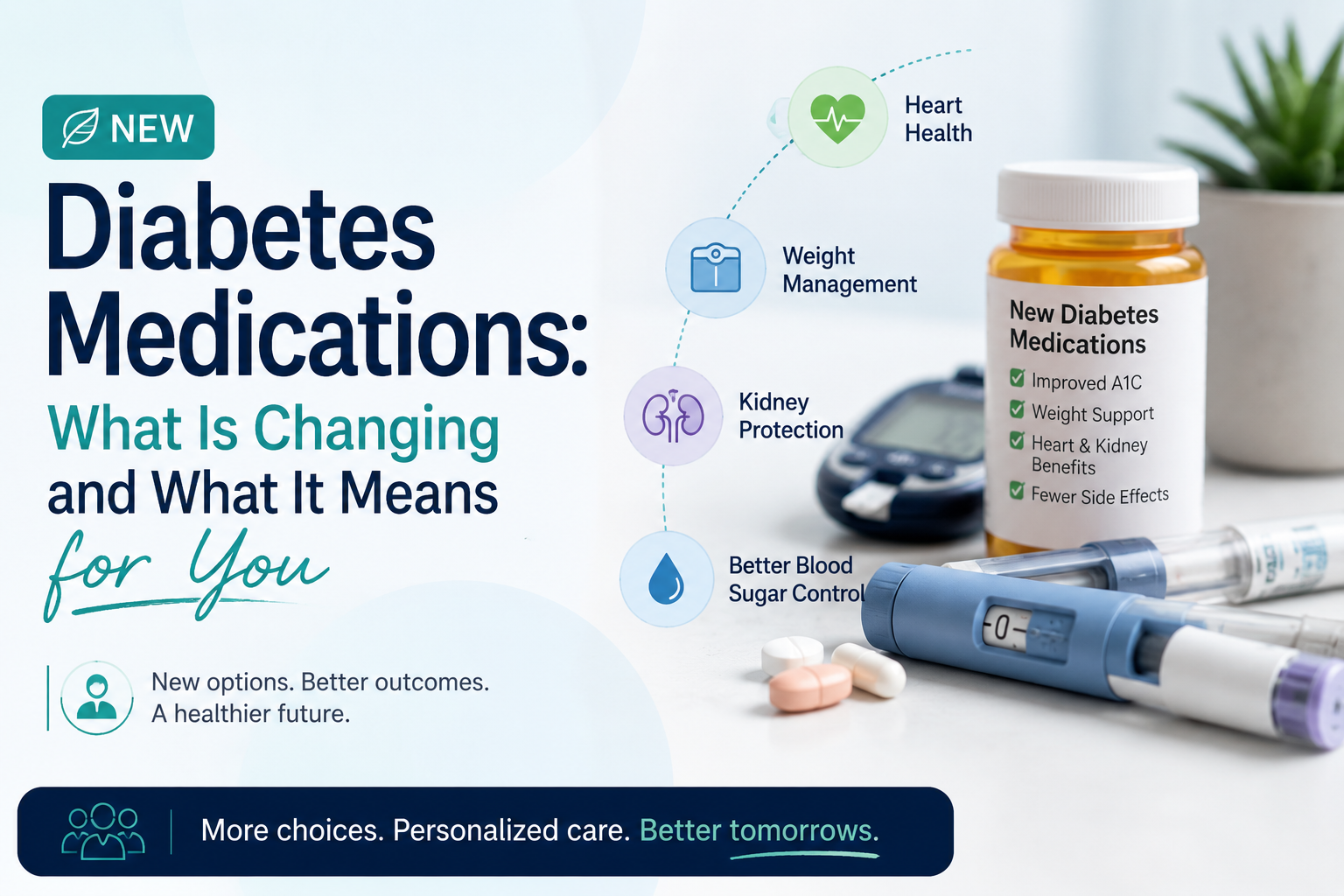
2026 is shaping up to be one of the most significant years in diabetes treatment in over a decade. New NICE guidance published in February 2026 has fundamentally changed how type 2 diabetes is treated in the UK, moving away from a one-size-fits-all approach based on metformin alone to a more personalised treatment pathway that prioritises heart and kidney protection alongside blood sugar control.
For the estimated 4.3 million people living with type 2 diabetes in the UK, and the many more managing type 1 diabetes or prediabetes, understanding what is changing, which medications are being offered earlier, and what the new treatment pathways mean in practice is genuinely important. This guide brings together the key changes in clear, accessible language.
The Biggest Change in 2026: New NICE Guidance for Type 2 Diabetes
For most of the past two decades, the standard starting point for newly diagnosed type 2 diabetes in the UK was a single medication: metformin. It controlled blood sugar effectively, it was inexpensive, and it was well understood. For many people, it worked well for years.
NICE guidance published in February 2026 has now changed this. Most people newly diagnosed with type 2 diabetes should now be offered metformin alongside an SGLT-2 inhibitor from the start of treatment, rather than being started on metformin alone and waiting to see if additional medication is needed later.
NICE’s analysis suggests that using SGLT-2 medicines earlier in the treatment pathway, combined with the introduction of GLP-1 receptor agonists and tirzepatide for some people, could prevent around 17,000 deaths over a three-year period across the UK by reducing the risk of heart attacks, strokes, and kidney problems.
This is a substantial shift. The change reflects a growing body of clinical evidence showing that the benefits of these newer medications go well beyond blood sugar control. They protect the heart and kidneys in ways that older diabetes medications do not, and starting them earlier produces better long-term outcomes.
SGLT-2 Inhibitors: Now a First-Line Treatment
What Are SGLT-2 Inhibitors?
SGLT-2 inhibitors, also called gliflozins, are a class of medication that work by causing the kidneys to remove excess glucose from the body through urine. They lower blood sugar without causing hypoglycaemia and have been shown in large clinical trials to significantly reduce the risk of heart failure hospitalisation and slow the progression of chronic kidney disease.
Common SGLT-2 inhibitors prescribed in the UK include dapagliflozin, empagliflozin, canagliflozin, and ertugliflozin.
What Has Changed
Previous NICE guidance recommended treatment only with metformin as the first step for most newly diagnosed type 2 diabetes patients. The new 2026 guidance moves SGLT-2 inhibitors from a second-choice treatment to a first-choice treatment for most people with type 2 diabetes.
These guidelines propose expanding access to newer diabetes medicines called SGLT-2 inhibitors from being second-choice treatments to first-choice treatments. Type 2 diabetes is complex and the new guidelines recommend that treatment is more individualised based on people’s clinical needs and their specific circumstances.
The Impact of Generic Dapagliflozin
One of the most practically significant developments accompanying the new guidance is the availability of a generic version of dapagliflozin, one of the most widely prescribed SGLT-2 inhibitors.
The NHS is set to save millions of pounds because dapagliflozin is now available as a clinically equivalent generic version. The estimated cumulative savings for 2025 to 2026 and 2026 to 2027 from generic dapagliflozin would be £560 million.
From September 2026, prescriptions of dapagliflozin are likely to rise in number by 230 percent to treat 2.4 million people. This is a strong example of how replacing end-of-patent medicines with generic ones can increase patient access significantly while still saving the NHS money.
In practical terms, this means that far more people with type 2 diabetes will be able to access SGLT-2 inhibitor treatment at NHS cost, and the savings generated will allow reinvestment into other areas of diabetes care.
Who Benefits Most From SGLT-2 Inhibitors
The 2026 update emphasises a personalised rather than one-size-fits-all approach, with specific protocols for high-risk and vulnerable cohorts. For renal impairment, patients with an estimated glomerular filtration rate above 30 mL per min per 1.73 m squared receive standard combination therapy. For those with an estimated glomerular filtration rate between 20 and 30 mL per min per 1.73 m squared, the guidance recommends dapagliflozin or empagliflozin in combination with a DPP-4 inhibitor.
People who already have kidney disease or heart failure have tailored recommendations, with SGLT-2 inhibitors offering particular benefits for protecting their kidneys and heart.
GLP-1 Receptor Agonists: Wider Access for More People
What Are GLP-1 Receptor Agonists?
GLP-1 receptor agonists are a class of injectable medications that mimic the action of a natural gut hormone called glucagon-like peptide 1. They stimulate the body to produce more insulin when blood sugar is high, suppress appetite, slow the emptying of the stomach, and reduce the production of glucagon, a hormone that raises blood sugar.
Current GLP-1 receptor agonists prescribed in the UK for type 2 diabetes include semaglutide (Ozempic), liraglutide (Victoza), and dulaglutide (Trulicity). They are administered by weekly or daily injection and have demonstrated significant benefits for blood sugar control, weight reduction, and cardiovascular outcomes in large clinical trials.
What Has Changed in 2026
Access to GLP-1 receptor agonists, such as semaglutide, dulaglutide, and liraglutide, and the related medicine tirzepatide, has been significantly expanded in the 2026 guidance. Around 810,000 more people could become eligible as a result of the expanded criteria.
People diagnosed with type 2 diabetes before the age of 40 face a higher lifetime risk of heart and kidney problems, so may benefit from adding a GLP-1 receptor agonist or tirzepatide. People living with obesity have specific recommendations that take account of their needs.
The guidance elevates GLP-1 receptor agonists like semaglutide and the dual GLP-1 and GIP receptor agonist tirzepatide within the treatment pathway. Earlier use of these medications, often alongside metformin and SGLT-2 inhibitors, is now recommended for people with atherosclerotic cardiovascular disease, obesity, or early-onset type 2 diabetes, where weight reduction and cardiovascular risk modification are priorities.
Who Is Now Eligible for GLP-1 Therapy
Under the new 2026 NICE guidance, GLP-1 receptor agonists are now recommended for:
People with type 2 diabetes who have established cardiovascular disease caused by blocked arteries, where the cardiovascular protective effect of GLP-1 therapy adds significant value alongside blood sugar control.
People diagnosed with type 2 diabetes before the age of 40, who face a disproportionately high lifetime burden of cardiovascular and renal complications and who stand to benefit more from earlier escalation to these medicines.
People living with obesity alongside type 2 diabetes, where the appetite-suppressing and weight-reducing properties of GLP-1 therapy address two aspects of the condition simultaneously.
If you fall into any of these categories and are not currently prescribed a GLP-1 receptor agonist, speaking to your GP or diabetes nurse about whether you are now eligible under the new guidance is worth doing at your next appointment.
Tirzepatide (Mounjaro): The Dual-Action Medicine Expanding Access
What Is Tirzepatide?
Tirzepatide, sold under the brand name Mounjaro in the UK, is a once-weekly injectable medication that acts on two separate hormonal pathways simultaneously. It is a dual GLP-1 and GIP receptor agonist, meaning it activates both the GLP-1 pathway that existing medications like semaglutide act on, and a second pathway involving the glucose-dependent insulinotropic polypeptide hormone.
The dual GLP-1 and GIP mechanism generally produces stronger HbA1c reduction and weight reduction than semaglutide head to head, making it one of the most effective diabetes and obesity medications currently available.
Tirzepatide for Type 2 Diabetes in 2026
Tirzepatide is licensed for type 2 diabetes and prescribed in NHS diabetes services where it fits NICE treatment criteria, typically after metformin and as an alternative to other GLP-1 agonists such as semaglutide and liraglutide.
NHS eligibility for tirzepatide in type 2 diabetes requires inadequate glycaemic control despite existing treatment, with continuation dependent on achieving at least an 11 mmol per mol HbA1c reduction and 3 percent weight loss at six months.
Tirzepatide for Obesity Management in 2026
Tirzepatide has also received NICE approval for weight management in people with obesity, under NICE technology appraisal TA1026. This pathway is relevant for many people with type 2 diabetes who also live with obesity, as the conditions frequently coexist.
NICE has confirmed that NHS Mounjaro will be available to 250,000 patients with obesity over the next three years from 2025 to 2028, prioritising those with the highest BMIs and obesity-related health complications.
From 1 April 2026, NHS England confirmed that prescribing of tirzepatide for obesity would be incorporated into the 2026 to 2027 GP contract through new Quality and Outcomes Framework indicators.
The phased rollout continues through 2027, with three cohorts determining access. Cohort 2, covering patients with a BMI between 35 and 39.9, is due to begin in June 2026, and Cohort 3, covering patients with a BMI of 40 or above with three qualifying conditions, is set to begin in April 2027. All NHS tirzepatide prescriptions require mandatory engagement with behavioural support.
Supporting Your Diabetes Management in 2026
The 2026 NICE guidance changes will take time to translate from national policy into individual GP consultations and updated prescriptions. In the meantime, the most practical steps any person with type 2 diabetes can take are to attend their regular diabetes reviews, to raise the question of whether the new guidance changes their eligibility for any medication, and to ensure their blood sugar monitoring gives them and their care team the information needed to make good decisions.
For those who self-fund their diabetes monitoring supplies, Diabetes Pharmacy UK stocks a comprehensive range of CGM sensors, glucose meters, test strips, lancets, and accessories at competitive UK prices with fast delivery.
Key products to support your monitoring in 2026:
- FreeStyle Libre 2 Sensor — up to 14 days continuous glucose monitoring
- FreeStyle Libre 3 Sensor — continuous automatic readings every minute
- Abbott FreeStyle Libre 2 Sensor 4-Pack — best value multi-pack for regular users
- Dexcom ONE Sensor 3-Pack — 30 days of real-time CGM
- Dexcom ONE Transmitter — replacement transmitter for Dexcom ONE users
- Accu-Chek FastClix Lancing Device — comfortable six-lancet drum system
- Accu-Chek Aviva Test Strips 50-Pack — clinically validated blood glucose testing
- GlucoRx Sterile Lancets 200-Pack — cost-effective 30-gauge lancets
What These Changes Mean for People With Type 2 Diabetes
If You Were Recently Diagnosed
If you have been diagnosed with type 2 diabetes in 2026 or if your diagnosis is relatively recent, you may now be offered a combination of modified-release metformin and an SGLT-2 inhibitor from the start rather than being started on metformin alone.
Medicines should be introduced stepwise, beginning with metformin to assess tolerability before adding SGLT-2 inhibitors. Healthcare providers must assess diabetic ketoacidosis risk factors before SGLT-2 inhibitor initiation and implement appropriate safety protocols.
If you have not yet had a conversation about SGLT-2 inhibitors with your GP or diabetes care team, raising the subject at your next review is worthwhile. The new guidance gives your GP clear grounds to add these medications at an earlier stage of treatment.
If You Were Diagnosed With Type 2 Diabetes Before Age 40
People with early-onset diabetes, diagnosed before age 40, face higher lifetime cardiovascular and renal risk and may benefit from earlier escalation to a GLP-1 receptor agonist or tirzepatide.
If you were diagnosed young and are not currently on a GLP-1 receptor agonist, asking your GP whether you are now eligible under the new guidance is an important step. The earlier lifetime risk profile that applies to early-onset type 2 diabetes is precisely the situation the expanded eligibility criteria are designed to address.
If You Live With Both Obesity and Type 2 Diabetes
The 2026 guidance recognizes that obesity and type 2 diabetes frequently coexist and that treating both conditions simultaneously produces better outcomes than treating them sequentially. If you have both conditions and are not currently on a GLP-1 receptor agonist or tirzepatide, the expanded eligibility criteria mean that more people in this situation are now eligible for these medications.
If You Have Kidney Disease or Heart Disease Alongside Type 2 Diabetes
SGLT-2 inhibitors have demonstrated particularly strong benefits for people with chronic kidney disease and heart failure alongside type 2 diabetes. The cardioprotective and renoprotective effects documented in large cardiovascular outcome trials were a primary driver of the decision to move these medications to first-line status in the new NICE guidance.
If you have kidney disease or heart failure and are not currently prescribed an SGLT-2 inhibitor, discussing your eligibility with your GP is an important conversation to have in 2026.
Monitoring Your Blood Sugar Alongside New Medications
Any change in diabetes medication requires careful monitoring of blood sugar levels in the period following the change. Understanding how a new medication is affecting your glucose levels, identifying patterns across the day, and responding appropriately to high or low readings all depend on having reliable and accessible monitoring.
Continuous Glucose Monitoring
For people on insulin or those whose care team has recommended continuous glucose monitoring, CGM sensors offer the most detailed and convenient picture of blood glucose trends. Rather than a single reading taken at a specific moment, CGM provides a continuous stream of readings that shows how glucose is moving throughout the day and night, which is particularly useful when a new medication is being introduced.
The FreeStyle Libre 2 is one of the most widely used CGM systems in the UK. Worn on the upper arm for up to 14 days, it provides real-time glucose readings through the FreeStyle LibreLink app and optional high and low glucose alerts, without the need for routine finger prick testing.
The FreeStyle Libre 3 is Abbott’s most advanced sensor, offering continuous automatic glucose readings sent directly to a smartphone every minute without needing to scan. For people starting new medications and wanting the most complete picture of how their glucose is responding, the Libre 3 provides that level of detail continuously and discreetly.
For those who prefer to stock up: the Abbott FreeStyle Libre 2 Sensor 4-Pack offers the most cost-effective approach for self-funding users who use sensors continuously.
For Dexcom users, the Dexcom ONE Sensor 3-Pack provides 30 days of continuous real-time glucose monitoring with automatic five-minute readings and alerts sent directly to a smartphone.
Blood Glucose Meters for Calibration and Verification
Even with a CGM in place, there are moments when a traditional finger-prick reading provides a useful verification, particularly during the early weeks of a new medication when readings may fluctuate more than usual, or when sensor readings do not align with physical symptoms.
The Accu-Chek FastClix Lancing Device is one of the most comfortable and convenient lancing devices available in the UK, with a six-lancet drum system that minimises handling and a wide range of depth settings for different skin types.
For test strips to use alongside a traditional glucose meter, Accu-Chek Aviva Test Strips are widely available and compatible with the full range of Accu-Chek Aviva meters.
GlucoRx Sterile Lancets in a 200-pack provide a cost-effective supply of ultra-fine 30-gauge lancets suitable for most standard lancing devices and ideal for people who check their glucose regularly as a backup to CGM.
FAQs
- What are the newest diabetes medications available in 2026?
The newest and most widely discussed diabetes medications in 2026 include SGLT-2 inhibitors, GLP-1 receptor agonists, and tirzepatide (Mounjaro). These medications not only improve blood sugar control but also support weight loss, heart health, and kidney protection. - What changed in the 2026 NICE diabetes guidelines?
The 2026 NICE guidelines recommend a more personalised treatment approach for type 2 diabetes. Many patients are now advised to start treatment with both metformin and an SGLT-2 inhibitor earlier instead of relying on metformin alone. - What are SGLT-2 inhibitors used for?
SGLT-2 inhibitors help lower blood sugar by removing excess glucose through urine. They are also used to reduce the risk of heart failure, protect kidney function, and support long-term cardiovascular health in people with type 2 diabetes. - Which SGLT-2 inhibitors are commonly prescribed in the UK?
Common SGLT-2 inhibitors prescribed in the UK include dapagliflozin, empagliflozin, canagliflozin, and ertugliflozin. - Who qualifies for GLP-1 therapy in 2026?
People with type 2 diabetes who also have obesity, cardiovascular disease, or were diagnosed before age 40 may now qualify for GLP-1 medications under updated NICE guidance.