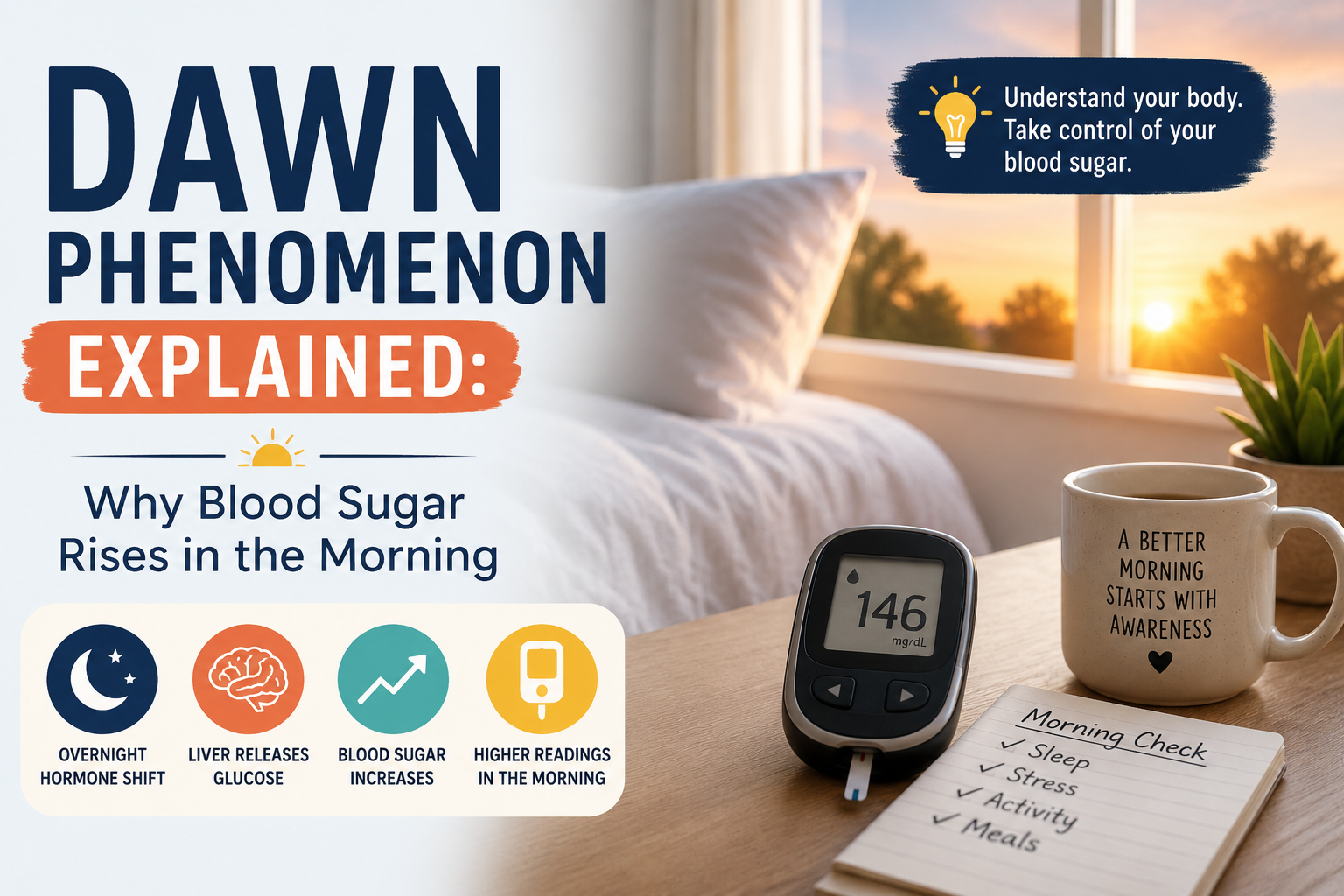
Many people with diabetes are surprised to wake up with higher blood sugar levels even when they have not eaten anything overnight.
You may go to bed with glucose levels in your target range, only to discover elevated readings first thing in the morning. This common occurrence is known as the dawn phenomenon.
The dawn phenomenon affects many people with Type 1 diabetes, Type 2 diabetes, and even some individuals with prediabetes. Understanding why it happens can help you manage morning blood sugar levels more effectively and identify patterns that may affect your overall diabetes control.
What Is the Dawn Phenomenon?
The dawn phenomenon refers to a natural rise in blood sugar that occurs in the early morning hours, usually between 3 a.m. and 8 a.m.
During this time, the body releases hormones that prepare you to wake up and start the day.
These hormones include:
- Cortisol
- Growth hormone
- Adrenaline
- Glucagon
While these hormones serve important functions, they can also cause the liver to release stored glucose into the bloodstream.
In people without diabetes, insulin production typically increases to keep glucose levels stable. However, people with diabetes may not produce enough insulin or may experience insulin resistance, resulting in higher morning blood sugar readings.
Why Does Blood Sugar Rise Overnight?
The body needs energy to prepare for waking and becoming active.
To provide that energy, the liver releases glucose while certain hormones temporarily reduce insulin effectiveness.
This combination can lead to elevated glucose levels before breakfast, even when no food has been consumed.
For many people, this increase is completely unrelated to what they ate the night before.
One of the safest first steps is increasing water intake.
Hydration helps the body flush excess glucose through urine while reducing dehydration caused by high blood sugar levels. Avoid sugary drinks, energy drinks, and fruit juices during hyperglycaemia episodes.
Staying hydrated is especially important if glucose levels remain elevated for several hours.
Dawn Phenomenon vs. Somogyi Effect
The dawn phenomenon is often confused with the Somogyi effect.
Although both can result in high morning blood sugar, they occur for different reasons.
The dawn phenomenon is caused by natural hormonal changes that increase glucose production.
The Somogyi effect occurs when blood sugar drops too low during the night, causing the body to release stress hormones that trigger a rebound rise in glucose levels.
Continuous glucose monitoring can help distinguish between these two situations by showing overnight glucose patterns.
Common Signs of the Dawn Phenomenon
Many people do not experience symptoms and only discover the issue through glucose monitoring.
Others may notice:
- High fasting blood sugar
- Consistently elevated morning readings
- Difficulty reaching glucose targets
- Higher HbA1c levels despite good daytime control
Tracking glucose trends over several days often helps identify recurring morning increases.
How Continuous Glucose Monitoring Can Help
Continuous glucose monitoring systems make it much easier to identify overnight glucose patterns.
Rather than relying on a single morning reading, CGM devices provide a detailed picture of glucose trends throughout the night.
This information helps users determine:
- When blood sugar begins rising
- How long the increase lasts
- Whether overnight lows are occurring
- How different routines affect glucose levels
Many people use FreeStyle Libre sensors to monitor overnight glucose changes and better understand the impact of the dawn phenomenon.
Factors That Can Make Morning Blood Sugar Higher
Several lifestyle and health factors may contribute to higher morning glucose readings.
These can include:
- Poor sleep quality
- Stress
- Late-night eating
- Insufficient diabetes medication
- Lack of physical activity
- Illness or infection
While the dawn phenomenon is a natural process, these factors may make its effects more noticeable.
Can You Reduce the Dawn Phenomenon?
Managing the dawn phenomenon often involves understanding personal glucose patterns and working with a healthcare professional to adjust treatment plans if needed.
Strategies may include:
- Reviewing evening meal choices
- Increasing physical activity
- Improving sleep habits
- Adjusting medication timing
- Monitoring glucose trends more closely
Because everyone responds differently, individualized management is usually most effective.
Why Morning Monitoring Matters
Morning glucose readings provide valuable information about overnight blood sugar control.
Consistently elevated fasting readings may indicate:
- Dawn phenomenon
- Medication issues
- Lifestyle factors affecting glucose
- Changes in insulin sensitivity
Identifying the cause can help improve long-term diabetes management and support healthier glucose levels throughout the day.
Helpful Diabetes Resources
Many people find additional education helpful when managing blood sugar fluctuations.
Useful resources include:
- Diabetes Blog
- Blood Sugar Monitoring Guides
- FreeStyle Libre Education Articles
- CGM Usage Tips
Learning how daily habits affect glucose can make it easier to manage patterns like the dawn phenomenon.
Final Verdict
The dawn phenomenon is a common reason why blood sugar levels rise in the morning, even without eating overnight.
It occurs because the body naturally releases hormones that increase glucose production before waking. For people with diabetes, this process can lead to higher fasting blood sugar readings.
Understanding your overnight glucose patterns is one of the most effective ways to identify and manage the dawn phenomenon.
With regular monitoring, healthy lifestyle habits, and guidance from your healthcare team, morning blood sugar spikes can often be managed more effectively.
FAQS
- What is the dawn phenomenon?
The dawn phenomenon is a natural increase in blood sugar that occurs during the early morning hours due to hormone release. - What time does the dawn phenomenon happen?
It usually occurs between 3 a.m. and 8 a.m. - Does everyone with diabetes experience the dawn phenomenon?
No, but it is common among people with both Type 1 and Type 2 diabetes. - How can I tell if I have the dawn phenomenon?
Continuous glucose monitoring or overnight blood sugar testing can help identify recurring morning glucose increases. - Can the dawn phenomenon be prevented?
While it may not always be completely prevented, monitoring glucose trends and adjusting lifestyle or treatment strategies may help reduce its impact.