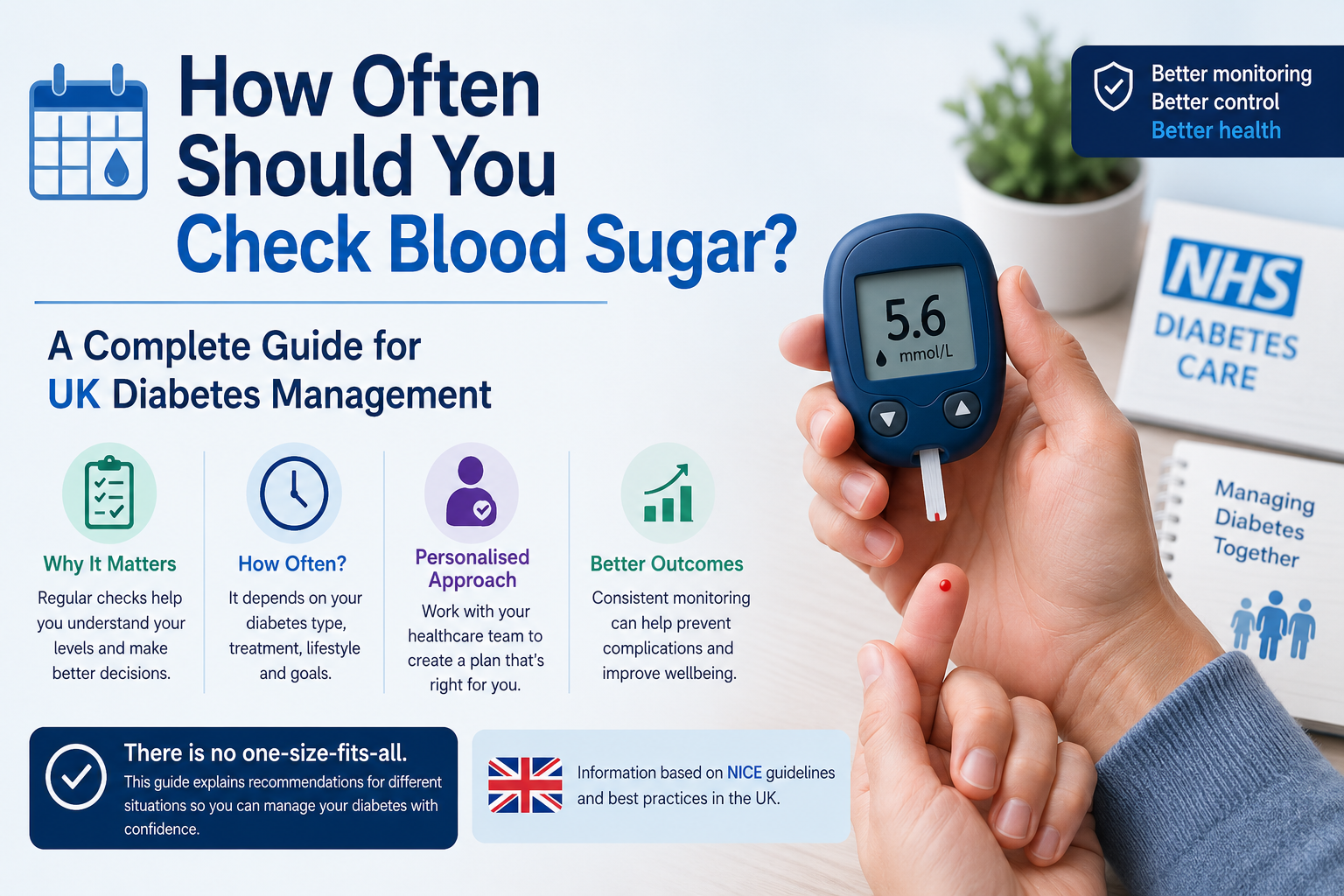
Monitoring your blood sugar regularly is an important part of managing diabetes and maintaining overall health. Whether you have Type 1 diabetes, Type 2 diabetes, gestational diabetes, or prediabetes, understanding how often to check your blood glucose can help you stay in control and reduce the risk of complications.
In the UK, blood sugar testing recommendations can vary depending on your diabetes type, medication, lifestyle, and advice from your GP or diabetes specialist team. This guide explains when and how often you should check your blood sugar levels for effective diabetes management.
Why Blood Sugar Monitoring Matters
Regular blood glucose monitoring helps you:
- Understand how food affects your blood sugar
- Track the impact of medication or insulin
- Prevent high and low blood sugar episodes
- Improve long-term diabetes control
- Reduce the risk of complications
- Support healthier lifestyle choices
Monitoring also helps your healthcare team adjust treatment plans more effectively when needed.
How Often Should People with Type 1 Diabetes Check Blood Sugar?
People with Type 1 Diabetes usually need to monitor blood sugar several times daily because the body does not produce insulin naturally.
Typical UK Recommendations for Type 1 Diabetes
You may need to check blood sugar:
- Before meals
- After meals
- Before driving
- Before bedtime
- Before and after exercise
- During illness or stress
- Whenever symptoms of low blood sugar occur
Many people with Type 1 diabetes check glucose levels between 4 and 10 times per day depending on insulin therapy and glucose targets.
Continuous glucose monitoring (CGM) systems are also increasingly used across the UK to help provide real-time glucose tracking.
How Often Should People with Type 2 Diabetes Check Blood Sugar?
Testing frequency for Type 2 Diabetes depends on how the condition is managed.
If You Use Insulin
People using insulin may need to test several times daily, especially:
- Before meals
- Before bedtime
- Before driving
- After taking insulin
- Before physical activity
If You Manage Diabetes with Tablets or Diet
Some people with Type 2 diabetes may only need occasional monitoring depending on GP advice. Common testing times include:
- Fasting blood sugar in the morning
- Before meals
- Occasionally after meals
- A few times per week
Your diabetes nurse or GP will usually recommend a testing schedule suited to your condition.
Blood Sugar Monitoring During Pregnancy
Women with Gestational Diabetes often need more frequent monitoring to help maintain healthy glucose levels during pregnancy.
Testing is commonly recommended:
- First thing in the morning
- Before meals
- 1–2 hours after meals
- Before bedtime
Monitoring helps reduce risks for both mother and baby.
Best Times to Check Blood Sugar
Fasting Blood Sugar
Check immediately after waking up before eating or drinking anything except water.
Before Meals
Helps assess your baseline glucose level before eating.
After Meals
Usually checked 1–2 hours after meals to understand how food affects blood sugar.
Before Driving
In the UK, drivers using insulin must check blood sugar before driving and during long journeys to meet DVLA safety guidance.
Before Bedtime
Helps reduce the risk of overnight hypoglycaemia.
Normal Blood Sugar Targets in the UK
Blood sugar targets may vary depending on age, treatment, and personal health goals, but common NHS targets include:
Testing Time | Recommended Blood Sugar Range |
Before Meals | 4–7 mmol/L |
2 Hours After Meals | Below 8.5–9 mmol/L |
Always follow the guidance provided by your healthcare professional.
Signs You Should Check Your Blood Sugar Immediately
You should test your blood glucose if you experience symptoms such as:
Symptoms of High Blood Sugar
- Increased thirst
- Frequent urination
- Blurred vision
- Fatigue
- Headaches
Symptoms of Low Blood Sugar
- Sweating
- Shaking
- Dizziness
- Confusion
- Sudden hunger
Immediate testing helps you take action quickly and safely.
Continuous Glucose Monitoring (CGM) in the UK
Continuous Glucose Monitor devices are becoming increasingly popular in the UK for diabetes management.
Benefits of CGMs include:
- Real-time glucose tracking
- Alerts for high and low glucose levels
- Reduced finger-prick testing
- Better glucose trend analysis
- Improved diabetes management insights
CGMs can be especially helpful for people using insulin or managing fluctuating glucose levels.
Final Verdict
How often you should check blood sugar depends on your diabetes type, medication, lifestyle, and personal health needs. Some people may need to test several times daily, while others may only need occasional monitoring.
Regular blood glucose monitoring helps you understand your body better, reduce complications, and manage diabetes more confidently. Always follow advice from your UK healthcare provider and use trusted glucose monitoring products for accurate results.