Diabetes is one of the most common health conditions worldwide, yet many people are still confused about the difference between its two main types. When someone is diagnosed, one of the first questions they ask is whether they have Type 1 or Type 2 diabetes—and what that actually means.
Understanding the type 1 vs type 2 diabetes comparison is important because both conditions affect the body differently and require different approaches to management. While they share the same name, they are not the same disease.
If you are learning about diabetes or exploring tools to manage it, such as buy FreeStyle Libre sensors in the UK at an affordable price, this guide will help you understand the key differences clearly.
What Is Type 1 Diabetes?
Type 1 diabetes is an autoimmune condition. This means the body’s immune system mistakenly attacks the insulin-producing cells in the pancreas.
As a result, the body stops producing insulin completely. Since insulin is essential for controlling blood sugar levels, people with Type 1 diabetes must take insulin every day.
This condition is often diagnosed in children or young adults, although it can develop at any age.
Because insulin production is absent, consistent monitoring is critical. Many users prefer to buy FreeStyle Libre sensors online in the UK to track glucose levels continuously and avoid sudden changes.
What Is Type 2 Diabetes?
Type 2 diabetes is the most common form of diabetes. It occurs when the body becomes resistant to insulin or does not produce enough insulin to maintain normal glucose levels.
Unlike Type 1, the body still produces insulin, but it does not work effectively. This leads to higher blood sugar levels over time.
Type 2 diabetes is often linked to lifestyle factors such as diet, physical activity, and weight, although genetics also play a role.
It is usually diagnosed in adults, but it is increasingly seen in younger individuals as well.
Key Differences Between Type 1 and Type 2 Diabetes
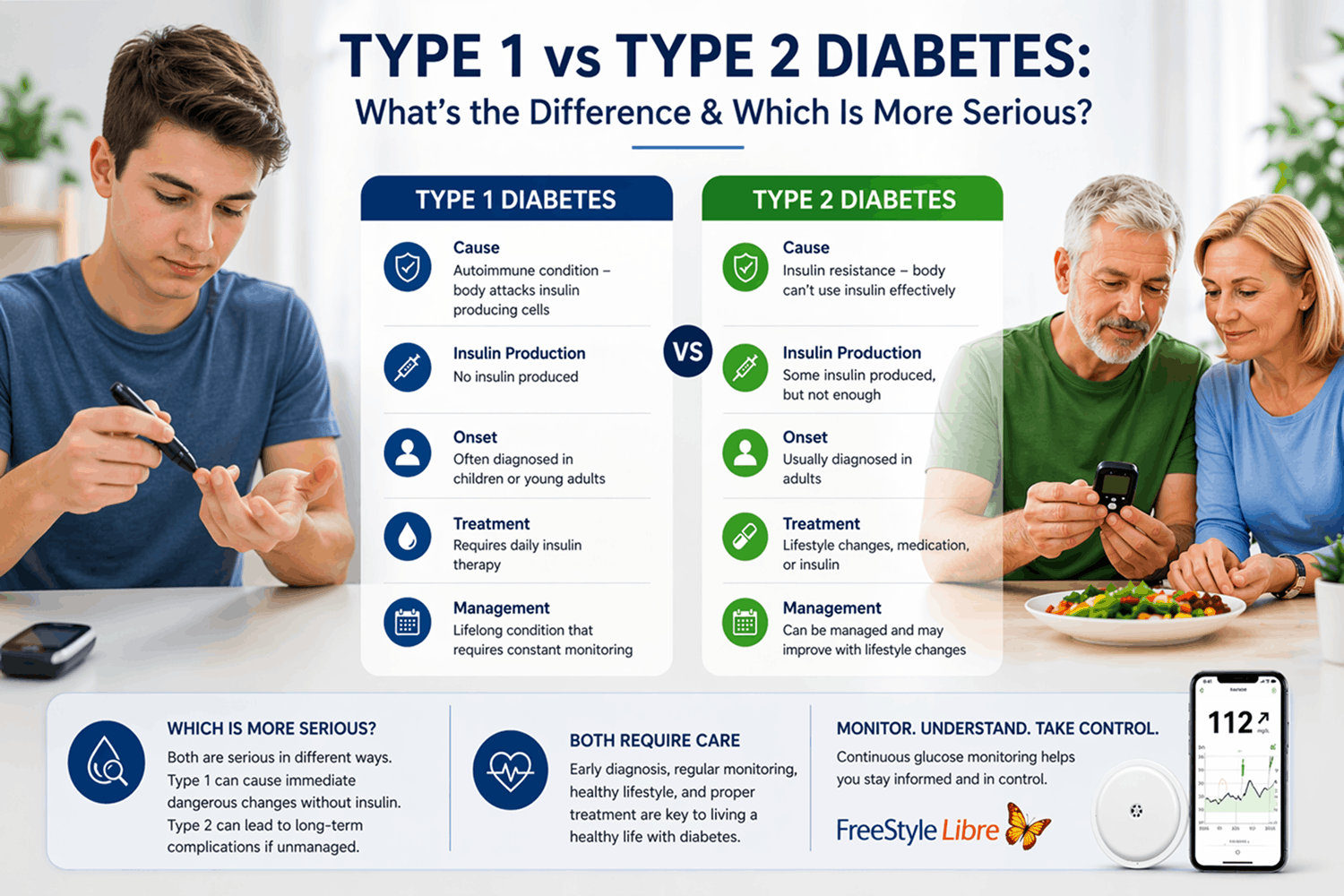
Understanding the difference between type 1 and type 2 diabetes helps clarify how these conditions vary.
Main Differences:
- Cause: Type 1 is autoimmune, Type 2 is insulin resistance
- Insulin Production: Type 1 produces none, Type 2 produces some
- Age of Onset: Type 1 often early, Type 2 usually later
- Treatment: Type 1 requires insulin, Type 2 may be managed with lifestyle and medication
- Reversibility: Type 1 is lifelong, Type 2 can sometimes be managed or improved
These differences highlight why each type requires a different management approach.
Symptoms: Type 1 vs Type 2 Diabetes
The symptoms of both types can overlap, but the way they develop is different.
Type 1 diabetes symptoms usually appear suddenly and can become severe quickly. These may include extreme thirst, frequent urination, fatigue, and rapid weight loss.
Type 2 diabetes symptoms often develop gradually and may go unnoticed for years. Common signs include tiredness, blurred vision, and slow healing of wounds.
Because Type 2 symptoms are less obvious, many people are diagnosed later in the progression of the condition.
Which Is More Serious?
One of the most common questions people ask is which type of diabetes is more serious. The answer is not straightforward. Both conditions are serious, but in different ways.
Type 1 diabetes requires immediate insulin therapy. Without insulin, blood sugar levels can rise dangerously, leading to life-threatening complications.
Type 2 diabetes develops more slowly, but if left unmanaged, it can lead to long-term complications such as heart disease, nerve damage, and kidney problems.
So, when comparing which diabetes is more serious, the reality is that both require proper care and attention.
Can Type 2 Diabetes Turn Into Type 1?
This is a common misconception. Type 1 and Type 2 diabetes are completely different conditions.
Type 1 is an autoimmune disorder, while Type 2 is related to insulin resistance. One does not turn into the other.
However, Type 2 diabetes can become more severe over time if not managed properly, which may require insulin therapy. This does not mean it has become Type 1.
How Are Type 1 and Type 2 Diabetes Managed?
Managing diabetes effectively depends on the type and severity of the condition.
For Type 1 diabetes, insulin therapy is essential. People must monitor their blood sugar levels regularly and adjust insulin doses accordingly.
For Type 2 diabetes, management may include lifestyle changes such as diet and exercise, along with medication if needed.
Management Approaches:
- Type 1 → Insulin + continuous monitoring
- Type 2 → Diet + lifestyle + medication
In both cases, monitoring plays a key role in maintaining stable glucose levels.
The Role of Glucose Monitoring
Regardless of the type, monitoring blood sugar levels is essential for effective diabetes management.
The continuous glucose monitoring system provides real-time data, helping users understand patterns and make better decisions.
Compared to traditional testing, CGM systems offer greater convenience and accuracy. This is why many users choose to buy FreeStyle Libre 3 CGM sensor UK for improved control.
Advanced options like FreeStyle Libre 3 Plus at a low price in the UK provide even better performance and reliability.
Which Type Requires More Monitoring?
Both types of diabetes require monitoring, but the frequency can vary.
Type 1 diabetes usually requires continuous monitoring because insulin levels must be carefully managed throughout the day.
Type 2 diabetes may require less frequent monitoring, especially in early stages, but it becomes more important as the condition progresses.
In both cases, using a CGM system makes monitoring easier and more effective.
Why Understanding the Difference Matters
Understanding the type 1 diabetes vs type 2 comparison helps you take the right steps toward managing the condition. It allows you to choose the correct treatment approach, monitor your health effectively, and reduce the risk of complications.
It also helps you communicate better with healthcare professionals and make informed decisions about your care.
Where to Buy Diabetes Monitoring Devices in the UK
If you are looking to buy FreeStyle Libre online in the UK, choosing a trusted supplier is important. You can explore options through the FreeStyle Libre official online pharmacy in the UK for genuine products and competitive pricing.
To learn more, visit the About Diabetes Pharmacy UK page. If you need help, you can contact the diabetes pharmacy support team.
You can also explore helpful insights in the diabetes blogs and tips UK section.
Final Thoughts
The type 1 vs type 2 diabetes comparison shows that while both conditions affect blood sugar levels, they are very different in terms of cause, treatment, and management.
Neither type is “better” or “worse”—both are serious and require proper care. With the right approach, both conditions can be managed effectively.
If you are ready to take control of your diabetes management, you can shop FreeStyle Libre sensors in the UK at an affordable price and monitor your glucose levels with confidence.