For many years, HbA1c has been the primary measurement used to assess long-term blood glucose control. While HbA1c remains an important indicator, advances in glucose monitoring technology have introduced another valuable metric: Time in Range (TIR).
As Continuous Glucose Monitoring (CGM) systems become increasingly popular across the UK, more people living with diabetes are learning how Time in Range can provide a clearer picture of their daily glucose management.
What Is Time in Range?
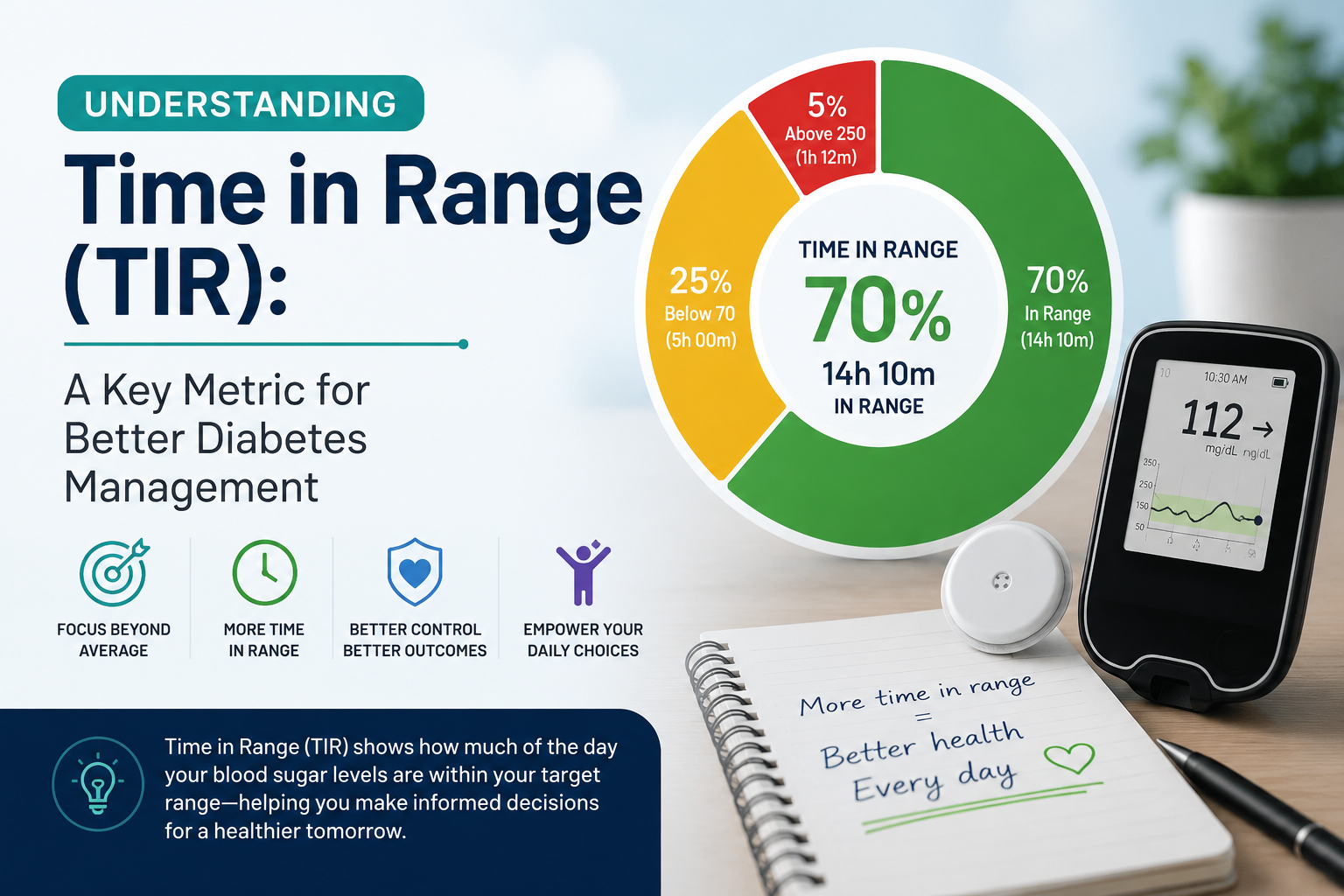
Time in Range refers to the percentage of time a person’s glucose levels stay within their target blood sugar range throughout the day.
For most adults with diabetes, the standard target range is typically between 3.9 mmol/L and 10.0 mmol/L, although individual targets may vary based on medical advice.
Rather than focusing on a single glucose reading, Time in Range measures how consistently blood sugar remains within a healthy range over days and weeks.
Why Time in Range Matters
Blood glucose levels naturally fluctuate throughout the day due to food, physical activity, stress, medication, and sleep patterns.
A person may have a good HbA1c result while still experiencing frequent highs and lows. Time in Range helps reveal these fluctuations by providing a more detailed view of glucose patterns.
Higher Time in Range percentages are often associated with:
- Improved glucose stability
- Reduced risk of diabetes-related complications
- Fewer episodes of hypoglycaemia
- Better overall diabetes management
- Increased confidence in daily decision-making
Smart Insulin Pens and Connected Devices
Modern insulin pens are evolving beyond simple injection devices.
Smart insulin pens can record dosing information, track injection history, and connect with mobile applications to support insulin management. These devices help reduce missed doses and improve treatment accuracy.
Features often include:
- Dose tracking
- Injection reminders
- Data sharing capabilities
- Integration with diabetes management apps
- Improved medication adherence
For many individuals, smart insulin technology offers greater convenience and confidence in insulin administration.
How Is Time in Range Measured?
Time in Range data is generated through Continuous Glucose Monitoring systems.
These devices record glucose levels throughout the day and automatically calculate:
- Time spent within target range
- Time spent above target range
- Time spent below target range
- Daily glucose patterns and trends
This information helps users understand how lifestyle choices and treatment plans affect blood sugar control.
What Is a Good Time in Range Score?
Healthcare professionals often recommend aiming for at least 70% Time in Range for many adults with diabetes.
A Time in Range of 70% means glucose levels remain within the target range for approximately 17 hours each day.
However, targets can vary depending on age, type of diabetes, pregnancy status, and individual health circumstances.
Tips to Improve Your Time in Range
Improving Time in Range often involves small, consistent adjustments rather than major lifestyle changes.
Monitor Glucose Trends Regularly
Reviewing glucose patterns can help identify recurring highs and lows and support informed decisions about meals, exercise, and medication.
Focus on Balanced Meals
Combining carbohydrates with protein, fibre, and healthy fats can help reduce sharp glucose spikes after eating.
Stay Active
Regular physical activity improves insulin sensitivity and can support more stable blood glucose levels throughout the day.
Follow Your Treatment Plan
Taking medications as prescribed and attending regular healthcare appointments can contribute to better glucose management and improved Time in Range results.
Final Verdict
Time in Range is becoming an increasingly valuable tool for people managing diabetes in the UK. While HbA1c remains important, TIR provides a deeper understanding of daily glucose control and helps identify opportunities for improvement.
By using glucose data effectively and making informed lifestyle choices, individuals can work towards increasing their Time in Range and achieving better long-term diabetes outcomes.
FAQS
- What does Time in Range (TIR) mean?
Time in Range (TIR) refers to the percentage of time your glucose levels stay within your target blood sugar range. For many adults with diabetes, the target range is typically between 3.9 mmol/L and 10.0 mmol/L. - Why is Time in Range important for diabetes management?
TIR provides a more detailed view of daily glucose control than a single HbA1c result. It helps identify how often blood sugar levels are too high or too low, supporting better diabetes management decisions. - How is Time in Range measured?
Time in Range is measured using Continuous Glucose Monitoring (CGM) systems. These devices track glucose levels throughout the day and calculate the percentage of time spent within, above, and below the target range. - What is considered a good Time in Range score?
Many healthcare professionals recommend aiming for at least 70% Time in Range. This means glucose levels remain within the target range for approximately 17 hours per day. Individual targets may vary based on personal health needs. - Can I improve my Time in Range?
Yes. Regular glucose monitoring, balanced meals, physical activity, medication adherence, and working closely with your healthcare team can help improve your Time in Range over time.