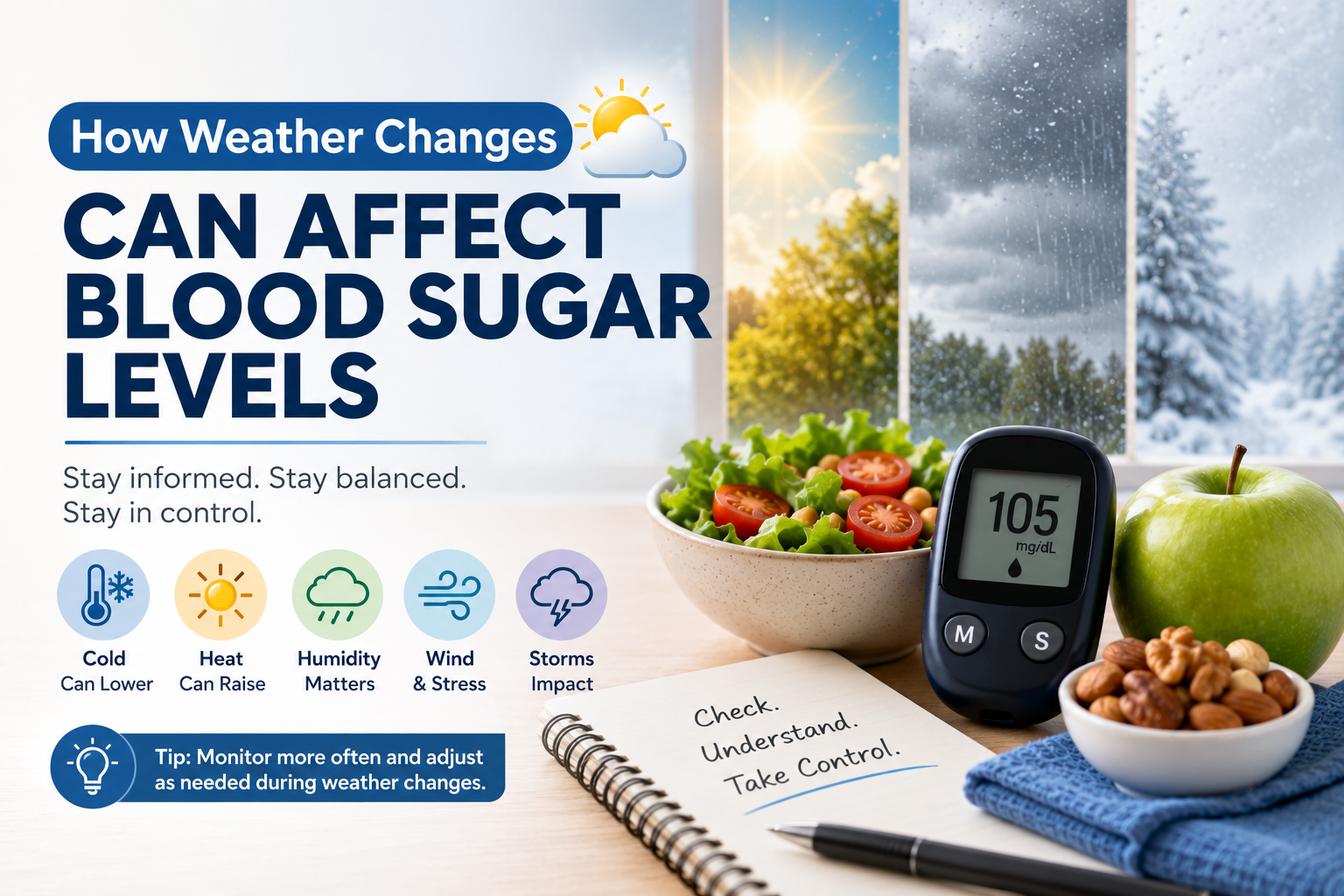
Most people with diabetes understand that food, medication, and exercise can influence blood glucose levels. However, one factor that is often overlooked is the weather.
Changes in temperature, humidity, and seasonal conditions can affect how your body responds to insulin, physical activity, hydration, and even glucose monitoring devices. Understanding these effects can help you make better decisions throughout the year and maintain more consistent blood sugar control.
Can Weather Really Impact Blood Sugar?
Yes. Both hot and cold weather can affect blood glucose levels in different ways.
Your body’s response to temperature changes may influence:
- Insulin sensitivity
- Hydration levels
- Physical activity patterns
- Appetite and eating habits
- Medication effectiveness
- Blood circulation
While the impact varies from person to person, many people with diabetes notice changes in their glucose readings during seasonal transitions.
How Hot Weather Can Affect Blood Sugar
Warm temperatures can increase blood flow, which may cause insulin to be absorbed more quickly than usual.
This can sometimes lead to:
- Lower blood sugar levels
- Increased risk of hypoglycaemia
- Faster insulin action
- Greater glucose fluctuations
Hot weather may also encourage outdoor activities, which can further lower blood sugar levels.
Dehydration and High Blood Sugar
One of the biggest concerns during summer is dehydration.
When the body loses fluids through sweating, glucose becomes more concentrated in the bloodstream. This can contribute to higher blood sugar readings.
Signs of dehydration include:
- Dry mouth
- Excessive thirst
- Fatigue
- Headaches
- Dark urine
Drinking water regularly throughout the day is especially important during hot weather.
How Cold Weather Can Affect Blood Sugar
Cold temperatures can create different challenges.
When the body becomes cold, it releases stress hormones that help maintain body temperature. These hormones may cause blood glucose levels to rise.
Cold weather may also lead to:
- Reduced physical activity
- Increased comfort eating
- Less time spent outdoors
- Higher insulin resistance
For some people, winter months can result in higher average glucose readings.
Seasonal Illnesses and Blood Sugar
Colds, flu, and seasonal infections are more common during certain times of the year.
When you’re unwell, your body releases hormones to fight infection. These hormones can increase blood sugar levels even if you’re eating less than usual.
During illness:
- Monitor glucose more frequently
- Stay hydrated
- Follow your healthcare provider’s sick-day guidance
- Continue monitoring for signs of hyperglycaemia
Humidity Can Make a Difference
High humidity can increase the body’s difficulty cooling itself.
As a result:
- Sweating may increase
- Dehydration risk may rise
- Glucose management may become more challenging
People who use Continuous Glucose Monitoring systems may also notice that excessive sweating occasionally affects sensor adhesion.
How Weather Affects Physical Activity
Weather often influences exercise habits.
During warmer months, many people:
- Walk more
- Cycle more frequently
- Spend more time outdoors
During colder months, activity levels may decline.Since physical activity affects glucose levels, seasonal changes in exercise routines can contribute to noticeable blood sugar differences.
Protecting Diabetes Supplies During Extreme Temperatures
Diabetes supplies can be sensitive to temperature changes.
Protecting Insulin
Insulin should never be exposed to excessive heat or freezing temperatures.
Avoid:
- Leaving insulin in a parked car
- Storing insulin in direct sunlight
- Freezing insulin accidentally
Always follow manufacturer storage recommendations.
Protecting CGM Sensors and Glucose Meters
Extreme temperatures may affect the performance of:
- Continuous Glucose Monitoring systems
- Blood glucose meters
- Test strips
- Sensor adhesives
Store supplies according to product instructions to maintain accuracy and reliability.
Tips for Managing Blood Sugar During Weather Changes
Seasonal changes don’t have to disrupt your diabetes management.
Consider these practical strategies:
- Monitor glucose levels consistently
- Stay hydrated year-round
- Adjust activity levels safely
- Carry glucose treatment when exercising
- Protect medications from extreme temperatures
- Watch for patterns during seasonal transitions
- Discuss recurring changes with your healthcare team
Tracking glucose trends can help identify how your body responds to different weather conditions.
When to Pay Extra Attention
You may need to monitor more closely when:
- Travelling to a significantly different climate
- Experiencing heatwaves
- Spending extended periods outdoors
- Participating in winter sports
- Recovering from seasonal illness
Being proactive can help prevent unexpected highs and lows.
Final Thoughts
Weather may not be the first factor that comes to mind when thinking about blood sugar management, but it can have a meaningful impact on glucose levels. Heat, cold, humidity, dehydration, illness, and seasonal lifestyle changes all play a role in how your body responds throughout the year.
By understanding these influences and monitoring your glucose regularly, you can make informed adjustments and stay confident in your diabetes management regardless of the season.
At Diabetes Pharmacy UK, we provide trusted diabetes supplies, Continuous Glucose Monitoring systems, blood glucose meters, test strips, lancets, and accessories to support your health in every season.