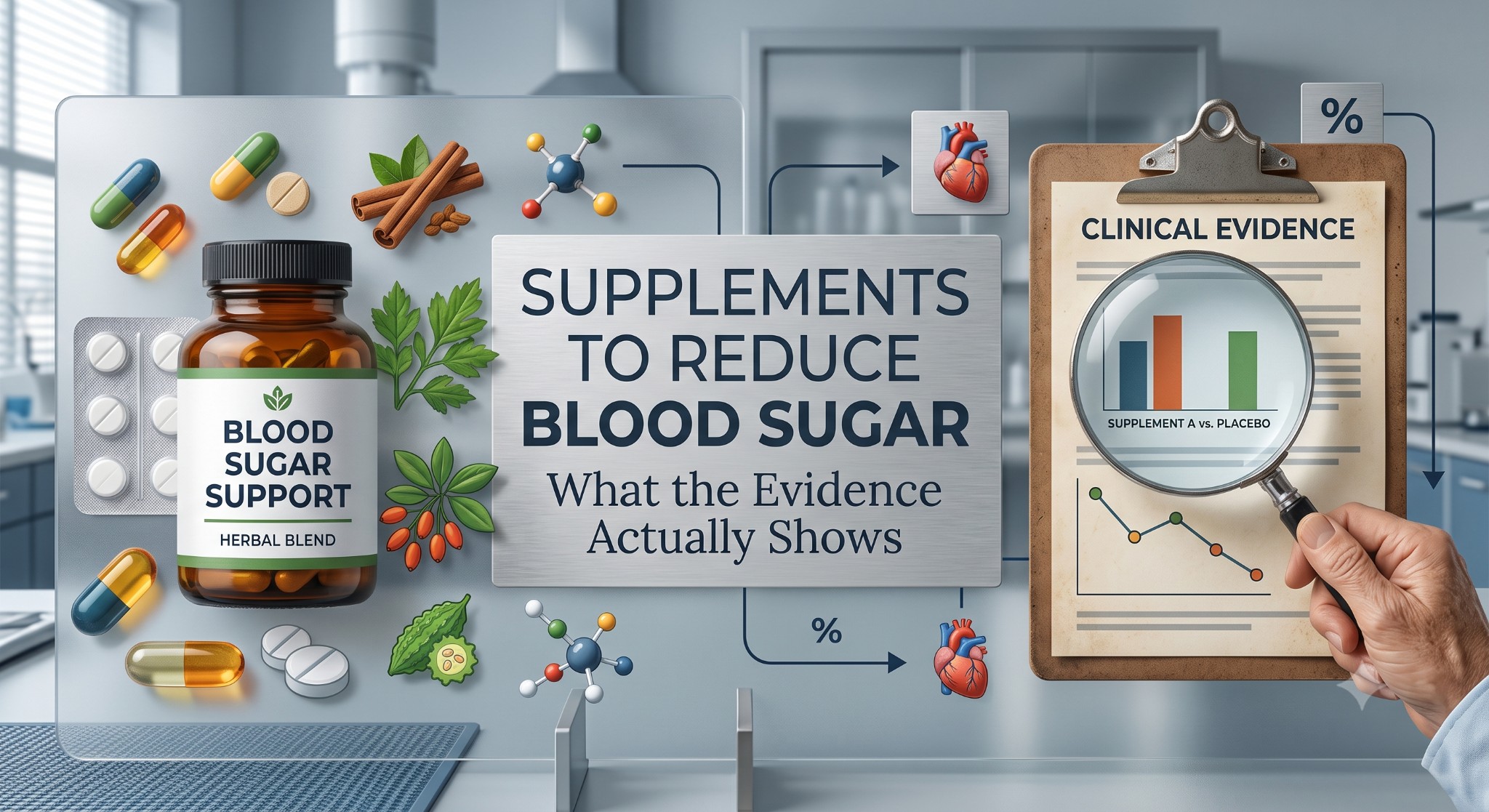
If you live with type 2 diabetes or prediabetes, you have probably wondered whether a supplement could help bring your blood sugar down. The honest answer is nuanced. A small number of supplements, most notably berberine, cinnamon, magnesium, alpha-lipoic acid and chromium, have shown modest, measurable effects on fasting glucose or HbA1c in clinical trials. None of them, however, is a replacement for medication, diet, exercise, or regular blood glucose monitoring.
This guide explains what the research shows for each supplement, typical studied doses, safety considerations, and how supplements fit alongside proven diabetes management. Always speak to your GP, pharmacist, or diabetes team before starting anything new, especially if you take glucose-lowering medication.
First, the foundations that actually work
No supplement outperforms the core pillars of blood sugar control: a balanced diet, regular physical activity, adequate sleep, medication taken as prescribed, and consistent monitoring so you can see what is working. If you would like practical, everyday changes to build on, our guide to everyday habits that keep blood sugar stable is a good place to start. Supplements should be viewed as a possible add-on at the margins, not the main strategy.
Because the effects are small, the only reliable way to know whether a supplement is helping you is to measure. A finger-prick meter or a continuous glucose monitor (CGM) lets you compare readings before and after a trial period of 8 to 12 weeks.
The supplements with the strongest evidence
1. Berberine
Berberine is a compound extracted from plants such as barberry and goldenseal, and it has the most consistent human evidence of any supplement on this list. A 2022 meta-analysis of 37 randomised trials (3,048 participants) found that berberine reduced fasting plasma glucose by about 0.8 mmol/L and HbA1c by roughly 0.6 percent, an effect that, in some trials, was comparable to metformin.
Typical studied dose: 900 to 1,500 mg per day, usually split across meals, for one to three months. Safety: berberine commonly causes digestive upset, such as diarrhoea, cramping, or constipation, and it can interact with many medications. It should be avoided in pregnancy and breastfeeding.
2. Cinnamon
Cinnamon may modestly improve insulin sensitivity and lower fasting glucose, though trial results are mixed. Two forms exist: Cassia (the common supermarket type, which is more studied but higher in coumarin) and Ceylon (“true” cinnamon, which is lower in coumarin). High-dose Cassia taken over long periods can stress the liver, so keep doses moderate.
Typical studied dose: 1 to 6 g per day. It is best treated as a minor, optional adjunct rather than a core intervention.
3. Magnesium
Magnesium deficiency is common in people with type 2 diabetes, and correcting a genuine deficiency appears to improve insulin sensitivity. The benefit is clearest when you are actually low in magnesium. Supplementing beyond your needs is unlikely to help and can cause diarrhoea. Dietary sources include leafy greens, nuts, seeds, and whole grains.
Typical studied dose: 250 to 350 mg per day of elemental magnesium. Safety: high doses can cause loose stools, and caution is needed with kidney disease.
4. Alpha-lipoic acid (ALA)
Alpha-lipoic acid is an antioxidant most valued for easing the symptoms of diabetic peripheral neuropathy (nerve pain), with meta-analyses also reporting modest reductions in fasting glucose and HbA1c. It is one of the better-supported options where nerve discomfort is a concern.
Typical studied dose: 300 to 600 mg per day. Safety: it is generally well tolerated, but it may add to the glucose-lowering effect of medication, so monitor for lows.
5. Chromium
Chromium, usually taken as chromium picolinate, plays a role in how the body uses insulin. The evidence is weak and inconsistent, but some trials show small improvements in fasting glucose, particularly in people with a deficiency. Note that chromium picolinate is not interchangeable with other chromium forms used in research.
Typical studied dose: 200 to 1,000 mcg per day. Safety: it is generally safe at typical doses, but it can interact with thyroid medication and some others.
Others with weaker or mixed evidence
- Gymnema sylvestre: the Ayurvedic “sugar destroyer,” studied for reducing sugar absorption and cravings.
- Fenugreek: a soluble fibre that may blunt post-meal spikes.
- Bitter melon: contains insulin-like compounds, though trial quality is generally low.
- Vitamin D: correcting a deficiency may support insulin function, but supplementing when levels are normal shows little benefit.
Dehydration and High Blood Sugar
One of the biggest concerns during summer is dehydration.
When the body loses fluids through sweating, glucose becomes more concentrated in the bloodstream. This can contribute to higher blood sugar readings.
Signs of dehydration include:
- Dry mouth
- Excessive thirst
- Fatigue
- Headaches
- Dark urine
Drinking water regularly throughout the day is especially important during hot weather.
At-a-glance comparison
The table below summarises how the main options compare. “Evidence strength” reflects the consistency and quality of human trials, not the size of the effect.
Supplement | Evidence | Typical studied dose | Key cautions |
Berberine | Strongest | 900 to 1,500 mg/day, split | GI upset; many drug interactions; avoid in pregnancy |
Alpha-lipoic acid | Moderate | 300 to 600 mg/day | Watch for lows alongside medication |
Magnesium | Moderate* | 250 to 350 mg/day | Benefit mainly if deficient; caution in kidney disease |
Cinnamon | Mixed | 1 to 6 g/day | Cassia is high in coumarin; keep doses moderate |
Chromium | Weak | 200 to 1,000 mcg/day | Interacts with thyroid medication |
*Strongest when correcting a genuine magnesium deficiency.
Using supplements safely
Because several of these supplements can lower blood sugar, combining them with insulin or medications such as sulphonylureas raises the risk of hypoglycaemia. Here are a few practical safeguards:
- Talk to your pharmacist or GP first, especially about interactions with your current prescriptions.
- Introduce one supplement at a time so you can tell what is actually having an effect.
- Measure before and after. Use a meter or CGM over an 8 to 12 week trial and look at fasting and post-meal readings.
- Choose quality products that state the specific form and dose used in research, such as berberine HCl.
Keeping testing consistent does not have to be expensive. Our guide to affordable blood sugar testing in the UK explains how to keep monitoring costs down, and if handling strips is a barrier, strip-free meter options can make regular checks easier to sustain.
Conclusion
Supplements are not a shortcut, and they are not a substitute for treatment. Berberine and alpha-lipoic acid have the most convincing evidence, magnesium helps mainly when you are deficient, and cinnamon and chromium are minor players at best. Any real-world benefit is modest and only appears when a supplement is paired with the fundamentals: good food, movement, prescribed medication, and regular glucose monitoring.
If you decide to trial one, do it with your healthcare team’s input and track the results. You can explore blood glucose meters, test strips and CGM sensors through the Diabetes Pharmacy online shop to measure whether a supplement is genuinely making a difference for you.
FAQs
- What is the best supplement to lower blood sugar?
Berberine has the strongest and most consistent clinical evidence, with meta-analyses showing reductions in fasting glucose and HbA1c that were comparable to metformin in some trials. However, it can cause digestive side effects and interacts with many medications, so it should only be used with medical guidance. - Can supplements replace diabetes medication?
No. No supplement is proven to replace insulin or oral diabetes medication. Supplements may offer a small additional benefit at best, and they should never be used instead of a treatment plan agreed with your healthcare team. - How long before a supplement shows an effect on blood sugar?
Most clinical trials run for 8 to 12 weeks. If you trial a supplement, monitor your fasting and post-meal readings across that period with a meter or CGM so you can objectively see whether it is helping. - Are blood sugar supplements safe to take with metformin?
Some, such as berberine, can add to metformin’s glucose-lowering effect and increase the risk of hypoglycaemia or digestive side effects. Always check with your pharmacist or GP before combining supplements with any prescription medication. - Does cinnamon really lower blood sugar?
Some studies show that cinnamon can modestly improve fasting glucose and insulin sensitivity, but the results are inconsistent. If you use it, keep doses moderate, especially with Cassia cinnamon, which is high in coumarin and can affect the liver at high intakes.